Tuesday, September 22, 2015

Unit 4: Blog Entry


Research and write a paragraph summary about four 20th century photographers of your choice. Each photographer needs to have a paragraph written about them each. You are to include two images of work from each of the four photographers (research online) with each summary. 
Here are some photographers from which you can choose.
Henri Cartier Bresson
Ansel Adams
Edward Weston
Jerry Uelsman
Minor White
Alfred Stieglitz
Eugene Atget
Man Ray
Walker Evans
Cindy Sherman


Ansel Adams

Ansel Easton Adams was an American photographer and environmentalist. He took photos that were black-and-white landscapes. They were photographs of the American West. Ansel Adams teamed up with Fred Archer and they developed the Zone System. This system was used for the proper exposure and adjust the contrast as the final print. Mr. Adams mainly used large format cameras. Reason for this was the fact that it had higher resolution. Concluding, that it helped ensure the sharpness of his images. Another things Ansel Adams contributed was finding Group f/64, a photography group. In his first portfolio in the 1920's, he earned nearly $3,900, a success. Ansel Adams died on April 22, 1984 in the ICU. Although he died, in 2010 his photograph, "CLEARING WINTER STORM, YOSEMITE NATIONAL PARK", sold for $722,500. 


Man White

Man White was born on July 9, 1908 and was an American photographer, theoretician, critic and educator. Mr. White took photos of landscapes, people and abstract matter. In his photos he made created technical mastery of visual sense of light and shadows. His photography journey started when he bought a 35mm Argus camera and decided to move to Seattle in 1937. About one year later he was a photographer for the Oregon Art Project. He was to take shots of historic buildings in Portland. Moving on, in the mid 1940's he showed the importance of how his photographs are presented to the viewer. Sadly Man White died on June 24, 1976.
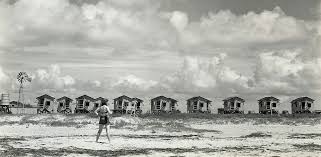


Edward Weston

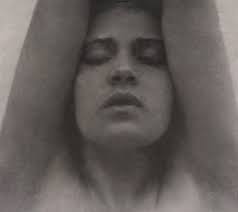
Edward Weston was born on March 24, 1886. His journey began when his father gave him a camera at age 16. In the early 1920's Mr. Weston's photos imitated painting and was identified a pictorialist style. He did go down to Mexico and found his lover in 1923.

While doing that he did a lot of portraits and nudes, which he is mainly known for today. Returning to United States in 1926, he settled down in California. He then kept on capturing nudes, close-ups, natural forms of landscapes. He did die in California on January 1, 1958.


Walker Evans

Walker Evans was born on November 3, 1903. what Mr. Walker did in the photography was influence the second half of the 20th century. His work has shown American life during second half of the century.The work included outdoor advertising, the beginnings of the automobile culture and not to mention domestic interiors. He died on April 10, 1975.

Monday, September 14, 2015

Unit 3: Blog Entry 2


On your blog site, have examples of people, places, and things (three images of each), with the rule of thirds grid drawn over the


Thursday, September 3, 2015


Homework 2


The challenge is to compose by controlling how the subject is seen and what emotions are felt by the viewer. This is done through composition—the relationship of the elements in an image with each other and with the frame. You know that good feeling you get when you snap a great shot? Well, just follow these guidelines, and you’ll start to see things differently through the viewfinder—and take great shots more often. Take a little time to compose each picture into the masterpiece it could be. Remember that you are trying to develop mastery in concept composition as well as in technique. [C2]


Visit the following sites and make notes in your blog about each topic. Include an image to illustrate what you are talking about. If one of your assignments from last year photos fits—then use that as your image.

Tambako The Jaguar
1) Get down on their level:
When taking a picture of a subject, you want to be at eye level with your subject. This does not mean that your subject has to be looking directly toward the camera. Such as this picture, notice that the dog is not looking at the camera. Also that the picture is at eye level with the dog. It would be strange if the photo was taken from above, and just saw the body.


2) Use a plain background:
A picture that has a cluttered background will be distracting. Instead have a picture that has a background that is simple. To have one, focus on trees or pole sprouting from the subject. The picture on the left is an otter. You are only focused on the otter because the background is really simple. No trees in the back.


3) Use flash outdoors:
On a cloudy day use the flash. Using a flash will make your subjects face brighten up and make them stand out. Also you can use the flash when it is sunny outside. It will lighten dark shadows under eye, nose, and neck. As you can see the photo on the left, when you use a flash there is little to no shadows.  Using the flash also makes the girl the main subject.


4) Move in close:
Moving closer to your subject is a great way to create impactful pictures. Another great thing about moving in closer to your subject will eliminate distraction in the background. The picture on the right is a close up of a red eye tree frog. Notice that the main attraction is the frog, not the leaf.


5) Take some vertical pictures:
Some subject look way better when it is vertical. Examples are the Eiffel Tower or tall buildings. Doing this gives of a better effect, such as this tower. It would look silly if the picture was landscape, therefor take the photo vertically.


6) Lock the focus:
To lock on a subject to make it clear you want to press the shutter button half way down. This allows it to focus on a subject. Finally finish pressing down on the shutter button. Such as the subject below.

7) Move it from the middle:
Place the main subject off-center and use rule of thirds. Doing this the picture will become more appealing toward your audience. For instance if you saw this deer in the middle it would not have a huge affect towards you. Placing it off-center it has a huge effect on how it turned out. 

8) Know your flash's range:
Alway know how far your flash can go. If the subject is to far from the flash then the subject will become a bit dark. Notice that in front  it is more bright than the back. In the back, there is a point where is just black. Therefore use flash and know your flash's range. 
9) Watch the light:
Depending where a subject is going to be standing, be careful. Be aware of the light surroundings, such as take photos when it is cloudy outside. This allows less shadow to be present. The young boy playing in the sand has no shadows. Along with that it is a cloudy day, concluding that if take photos when it is cloudy, the photo will become better with the proper light.
10) Be a picture director
Take charge when taking photo of your subjects. Either rearrange the subjects or take photo from different viewpoints. Such as this picture, the photographer made the tall people go in the back and the shorter people in the front.